
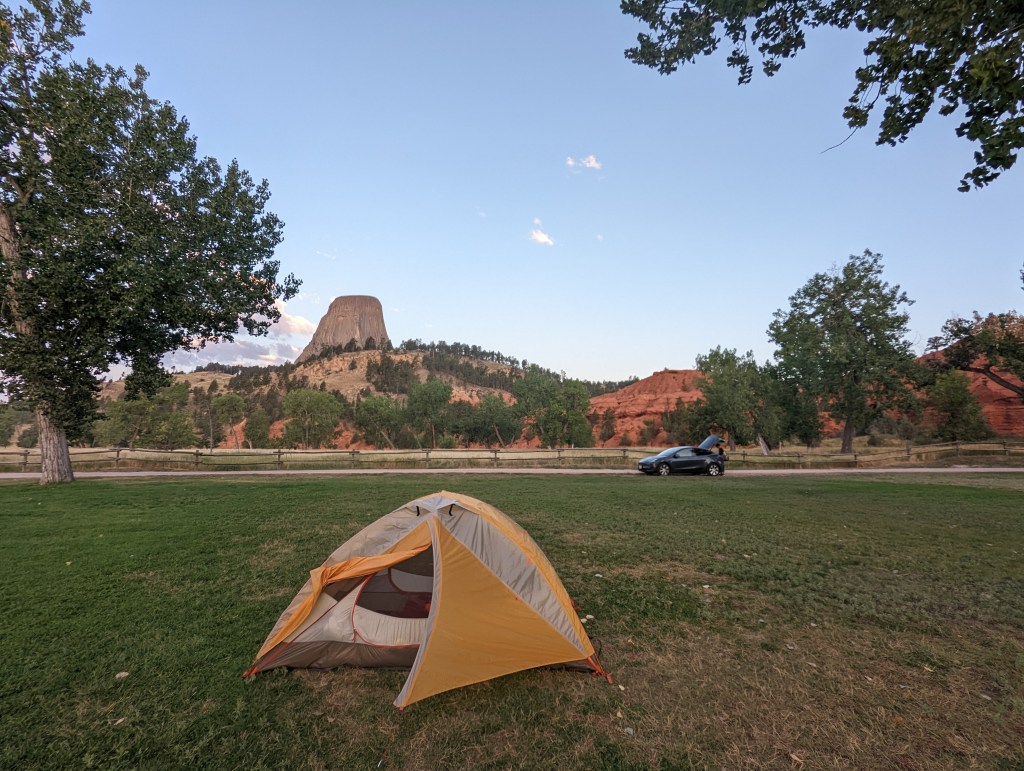
Completing a cross-country road trip is definitely doable now, but there are some quirks to the experience. Here are the top things I learned so far in my experience road tripping in a Tesla for the first time:
- Autopilot will save your sanity. The basic autopilot feature in the Tesla is the best part of having it for a long drive. A large part of the longer drives will be straight roads with speed limits of 70-80mph so letting the car handle turning and maintaining speed for a while makes the whole trip feel so much easier.
- Having the data plan is worth it…but enhanced autopilot isn’t. However, it doesn’t seem worth it to shell out for the enhanced autopilot, which would enable the car to change lanes and exit highways. We didn’t try enhanced autopilot for the record, but I noticed that for the most part you’ll be driving the same main highway for long periods of time and may even have few people to pass for long periods so it doesn’t seem worthwhile based on my experience without it. However, paying for the $10/mo data plan is totally worth it! There will definitely be some longer charging breaks and being able to stream a show or check ahead for traffic info is super handy on those occasional longer breaks.
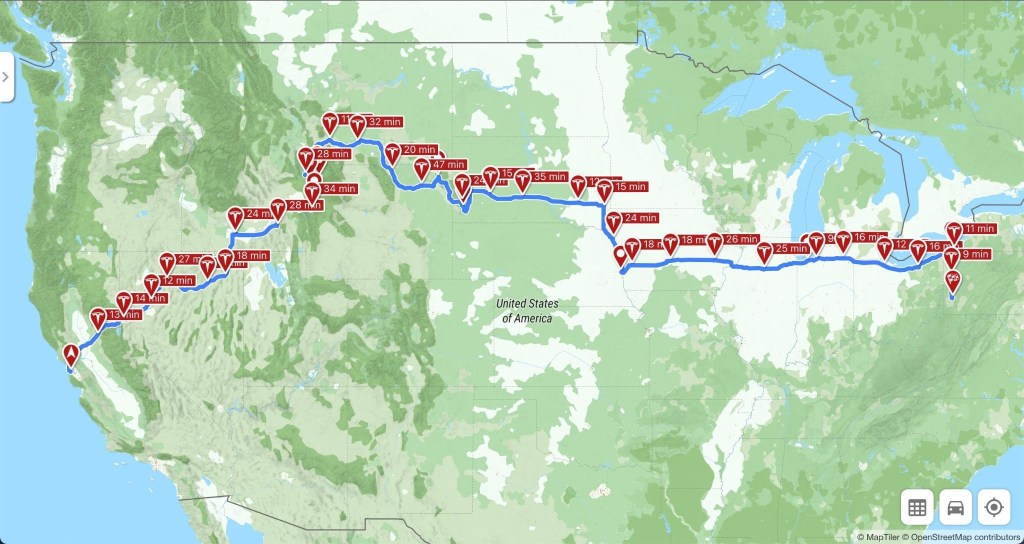
- Most of the breaks for charging will be welcome and relatively short. For the most part our breaks were all at superchargers and were under 30 minutes. We had to stop and charge about every 2.5 hours on average and by then we were usually due to get out to stretch our legs or grab a meal. Other electric vehicles may need to rely on longer charge breaks, which we had some of in the National Parks.
- National Parks Service has installed some free chargers and these will help a lot! NPS has installed free chargers at Yellowstone National Park and at Mt. Rushmore. Without the Yellowstone chargers it would have been really difficult to complete or enjoy the trip – we likely would have needed to backtrack over an hour to the nearest city each day we were in the park. In Yellowstone all of the chargers were general EV chargers, which meant they were slower (we spent about 6 hours charging, but could hike as it charged) but are compatible with all electric vehicles, which is great!
- It’ll take a lot longer than a gas car road trip would. Even though we only had longer charging periods in Yellowstone, the road trip would have been a lot shorter with a gas car and that’s something anyone considering this should prepare for. On longer driving days the charging stops add 1.5-2 hours of travel time. For example our 7 hour drive from Wall, SD to Omaha, NE required 3 charging stops, one of which was a longer 40 min stop, so the actual travel time was about 9 hours. The charging stops can also require you to take a route that may take slightly longer to make sure you can charge properly.
- Charge at least 5% beyond what the car tells you at stops. Even though stopping to charge and knowing this is extending travel time can be annoying, I recommend charging for longer than the car will recommend. Generally I’ve noticed that the car will leave a 10% range buffer when accounting for how much charge you need to get to your next destination, but this doesn’t account for driving 90mph and leaves very little room for error. Waiting just 5-10 minutes longer per charge allows you to feel more secure that bonus stops, speeding, and detours will all be okay.
- It’s doable! Road tripping in a gas car is definitely still easier but with the current charging network, using an electric vehicle to travel cross-country is now possible! More chargers are being installed all the time as well so hopefully someday soon we get to a point where using any electric vehicle is almost as easy as a gas car. Until then, if you’ve been considering trying an electric vehicle but range is worrying you – go for it! If we can make it cross-country, you can make it anywhere!
 The Wandering Hart
Leave a comment